
Thousands of mourners gathered at Tehran's Imam Khomeini Grand Mosalla on July 4, 2026 for a farewell ceremony honouring Iran's late supreme leader Ayatollah Ali Khamenei. Khamenei was killed on February 28 in Israeli and US airstrikes. Grieving crowds carried his portrait and expressed raw emotion as Iran continues its multi-day state funeral proceedings for the slain leader.

Thousands of mourners and international delegates gathered as Iran paid its final respects to its late supreme leader Ayatollah Ali Khamenei, who was killed in an Israeli strike on February 28, in Tehran.
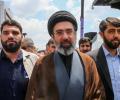
'Mojtaba Khamenei supervised the most recent repression in December 2025 and January 2026 which remains ongoing.'

Glimpses of Iran's farewell to Ayatollah Ali Khamenei as mourners gathered in huge numbers for his funeral procession in Tehran.

Quoting assembly of experts member Mirbaqeri, the report stated that while a "majority consensus over Khamenei's successor has been reached," the transition process is not yet fully complete as "some obstacles regarding the process need to be resolved."

PDP president Mehbooba Mufti has received an official invitation to attend the state funeral of Iran's slain supreme leader Ayatollah Ali Khamenei in Tehran. She will travel to Iran as a distinguished guest of India to pay her final respects, highlighting the historical and strategic ties between the two nations.

Millions of people, including international representatives, are expected to attend the funeral of Iran's Supreme Leader Ayatollah Ali Khamenei in Tehran. His death occurred at the start of the US-Israel war on Iran. US President Donald Trump announced a week-long pause in bombing for the funeral, while India was represented by Governor Syed Ata Hasnain and MoS External Affairs Pabitra Margherita. The event is anticipated to be one of the largest gatherings in Iran's history, with ceremonies delayed due to security concerns.

Ayatollah Ali Khamenei was killed in US-Israeli strikes on February 28.

This threat comes as the assembly of experts in Iran has reportedly reached a majority consensus regarding the successor to the late Supreme Leader Ayatollah Ali Khamenei, according to the Tehran-based Mehr News Agency (MNA).

US President Donald Trump has claimed that Washington has the capability to liquidate the surviving Iranian leadership with "one shot" if it desired, pointing to the congregation of top Iranian officials attending the week-long state funeral for the late Iranian Supreme Leader Ayatollah Ali Khamenei, who lost his life in joint US-Israeli air strikes on February 28.

The advisory follows recent developments, including Israeli airstrikes targeting central and western Iran.

Iran's Supreme Leader Mojtaba Khamenei will not attend his father, former Supreme Leader Ali Khamenei's, funeral due to security concerns stemming from Israeli threats. This decision follows a sharp warning from Iran's Foreign Minister to the United States, urging it to control Israel after its Defence Minister reportedly marked Khamenei for death. The incident highlights escalating tensions and ongoing diplomatic efforts to de-escalate hostilities in West Asia.

It is an unusual choice to depute a retired general for the funeral of a revered religious figure but a thoughtful one in an attempt to inject verve into the bilateral relationship and restore the equilibrium in India's West Asian policies, notes Ambassador M K Bhadrakumar.

The IRGC is the most powerful branch of Iran's armed forces and operates independently of the country's regular military, answering directly to Supreme Leader Ali Khamenei.

Iran is observing 40 days of public mourning following the death of Ayatollah Ali Khamenei, Reuters reported, citing Iranian state media.

In the central Iranian city of Isfahan, residents gathered at Imam Square to protest the strikes and to mourn what state media termed the martyrdom of Ayatollah Khamenei. Demonstrators raised slogans including "God is great" as the airstrikes continued.

India has advised its citizens residing in Iran to leave the country due to the evolving security situation, including protests and fears of potential US military action.

Pakistan is set to host the foreign ministers of Saudi Arabia, Egypt, and Turkiye to discuss a range of issues, including de-escalating tensions in West Asia.

For years, these two powers operated as "frenemies" in the shadow of Iran's regional influence. The frame here is "The Enemy of My Enemy."

'Many have contributed in terms of gold and silver. Ladies in big numbers have contributed their home belongings and gold.' 'Some have donated their cars too.'

As days turn into weeks and America loses more planes, as the destruction of trillions of dollars worth military assets piles up, and dead bodies of soldiers return in ever greater numbers in coffins, Trump will have to answer some very difficult questions to save his presidency, notes Ambassador M K Bhadrakumar.
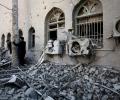
The logic of war plus the gathering storms in US politics as the midterms loom large leave him with no real alternative but to negotiate, points out Ambassador M K Bhadrakumar.

'As result, Netanyahu 'convinced' Trump to go to war with the help of overoptimistic Israeli intelligence assessments, essentially explaining to him that they only need to bomb Iran for 3-4 days, and the regime would then collapse.' 'Rather unsurprisingly, Netanyahu is ever since blaming his own intel service for the entire operation failing.'

The assassination of Ali Larijani, Iran's top security official, in an alleged Israeli strike has sent shockwaves through the region, prompting vows of revenge and raising concerns about escalating tensions.

'Much will depend on the position of the United States.' 'It will have to be seen to what extent the US will be more interested in achieving some form of a deal and to what extent Israel will be allowed to continue to carry out both airstrikes and the killing of Iranian officials.'
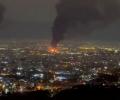
To be sure, Trump is furious, as the trajectory of the war is in a state of Zugzwang, as chess players call it. Trump and Netanyahu stare at two choices -- retreat in humiliation and concede Tehran's demands -- recognition of its rights, reparations, and binding security guarantees -- or perish in a quagmire, points out Ambassador M K Bhadrakumar.

Israel and the United States had a plan. Iran punched back. And now the Gulf is reeling, the world is beginning to feel the pain and, as on date, no one in Washington or Tel Aviv appears willing to admit that the punch has landed, notes Prem Panicker, continuing his must-read blog on the war in the Middle East.

Israel has for more than two decades and several US presidencies worked to draw the United States into a full-scale war with Iran. Having finally achieved that, the last thing it wants is Trump declaring victory and going home, as he is prone to do. Ali Larijani was the figure most capable of handing Trump a negotiated exit with something to show for it. Without Larijani, the road to an exit gets considerably narrower. Prem Panicker continues his must read daily blog on the Gulf War.

Booker-prize winning British author Ian McEwan, a close friend of Salman Rushdie, had offered the latter a place to hide when a death decree was issued against the controversial Indian-origin author by Iranian leader Ayatollah Khomeini.A detailed profile of the Atonement author in the New Yorker reveals that for a few days following the death sentence issued by Khomeini in February 1989, Rushdie had taken refuge at McEwan's cottage in Cotswolds, in central England.

Salman Rushdie's book The Satanic Verses was banned by India four months before Iran's Supreme leader late Ayatollah Khomeini issued a fatwa for his killing without any proper examination or a judicial process, writes the controversial author in his memoirs.
Salman Rushdie may have skipped the ongoing Jaipur Literature Festival, but his controversial novel The Satanic Verses continued to create a buzz at the event.
Rushdie went into hiding in 1989 after the Iranian leader Ayatollah Khomeini issued him with a death threat following the publication of his book, The Satanic Verses. He returned to public life only 10 years later when Tehran withdrew its support for the death sentence.
The controversial author has said that his experience of living with fundamentalism has relevance for all people now.

Zahra said that while the university officials visited the students and advised them to remain calm, they did not offer clarity on which areas might be safer.

The Israel Defence Forces (IDF) intensified its campaign in Lebanon with targeted airstrikes on Hezbollah strongholds in Beirut, hitting key weapons depots and terror infrastructure overnight, according to a report by Times of Israel.

The attack during a lecture in western New York left the prizewinning writer blind in one eye.

Rushdie said he was in "two minds" about whether to face his alleged attacker, who has pleaded not guilty, in court.
'I actually thought he punched me very hard. I didn't realise it was a knife in his hand, and then I saw the blood, and I realised there was a weapon'

'INDIA will easily cross 50 seats out of 90 in Jammu and Kashmir.'
